
Sophie Mothersele
Personal Developments in Relation to the Project
Arctic Quest 2026 allowed us as participants to develop teamwork, confidence and communication skills.
One of the biggest personal developments was confidence. By travelling to remote locations like Svalbard and Mainland Norway that had unfamiliar environments and climate, us participants needed to adapt to the new environments and weather. This adapting helped me to become more resilient and self-reliant in new situations. As the new environment is extreme compared to the UK climate meant that we stepped out of our comfort zone and were able to adapt to step out of my comfort zone.
I also was able to develop my teamwork skills within the expedition group. For 2 weeks I travelled and worked with the other 13 participants, which meant that I had to show good cooperation, patience and teamwork with the other participants. I also have to use communication and teamwork during the activities, working on the group project and normal expedition activities like meal times and travelling.
During the expedition I also have to complete my personal project. I had to make sure that I was organised in order to get all the data needed, prepared to make sure I had all the heart monitors when I needed it and managed my time in order to make sure that I was able to finish my project data collecting in order to complete it when we returned to the UK.
Arctic Quest 2026 also improved my environmental and cultural understanding of Arctic communities. This was my first time experiencing Arctic environment and it helped me to better understand climate change and how it affects climate animals and wildlife. Whilst on the expedition, we saw most of the snow melt over the 5 days we were in Svalbard, which highlighted to me how badly the environment is affected by climate change and the importance of protecting the fragile ecosystem.
Findings from the Project
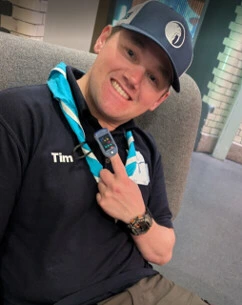
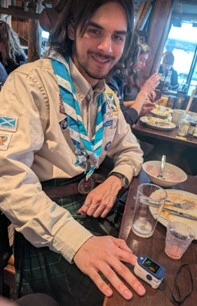
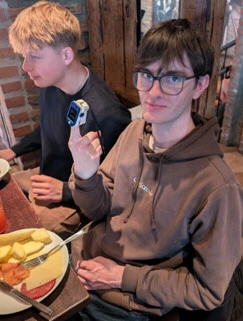
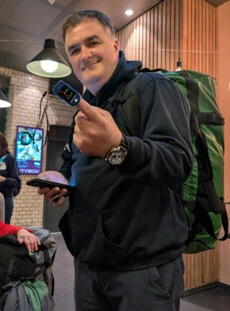
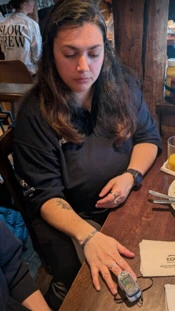
My project investigated whether the Arctic Climate affected the resting heart rates of the group when comparing them to their resting heart rates in the UK. I took the resting heart rates from all 14 participants at the same time each day with heart rate monitors over the expedition. I made sure that it was at the same time to maintain consistency.
My hypothesis predicted that the resting heart rates would decrease in the Arctic Climate due to the colder climate and cleaner air. The UK readings that I took shows that the average resting heart rate was between 80-95 bmp. When we moved to Oslo, these averages dropped to an average of 70-85 bpm. When we arrived in the Arctic Climate in Svalbard, the resting heart rates lowed even further to an average of 60-75 bpm, showing out lowest average. When we returned to the UK, the heart rates increased again, which supports the idea that the Arctic Climate lowered the average resting heart rates in the group.
On returning to the UK, I analysed the data. I completed a Student’s Paired T-Test as that statistic test shows whether the data that tracks changes in a group of the same people is related or whether it is due to chance, ii calculated a value of 2.89. when I compared this to the critical value table for 13 degrees of freedom (as there are 14 participants), that value was higher. This means that there was less than 5% chance that the results taken occurred by chance, and I could therefore reject my null hypothesis (there is no significant difference between resting heart rates in the UK Climate and Svalbard’s Arctic Climate). The statistical test also proved that the data that I collected was also significant and that Arctic Climate does impact resting heart rates.
My findings suggest that the colder climate slows the heart rate because the blood vessels vasoconstrict to conserve heat from the skin and transfer it to vital organs like the heart and brain. The colder climate may also reduce metabolic demand as the reactions slow down in the body. The cleaner Arctic air also may have improved the oxygen concentration in the air as there is less pollution and so the heart wouldn’t have had to beat as fast to transport the same volume of O2 around the body.
The project was successful as the consistent methods allowed for minimal anomalies in the data and the same participants allowed for easy comparison of climates. However, the uneven distribution of the ages of participants and the differences in physical activities during the days did limit the control I had over the reliability of some of the results.
Support Received from the Project
When undertaking my project, all 8 leaders acted as my mentors and provided me with continuous support throughout the process. They always encouraged the other participants to get involved – even taking some extra measurements at key points during the expedition like during the hike in Ulke. They also gave me some useful guidance and suggestions on how I could improve my methods and presentation. For example, Tim suggested I use Excel to produce better graphs, which improve their quality when in my final write up. He also suggested that I use the Paired T-test instead of a Student’s T-test when comparing my results, which meant that my stats test shows the significance of the data better. All of the leaders asked questions about the data I collected throughout the expedition, which helped to keep the engagement from all participants high through the expedition.
How the Grant Money was Used
I used the funding money to buy the heart rate monitors for my project. These were then used to take the heart rates of each participant every morning so that I could calculate an average and track how their heart rates changed over the course of the expedition. As my project data collection is now finished as the expedition is over, the heart rate monitors have now been donated to my scout group to be used during first aid training sessions. The young people can now learn the importance of heart rate during first aid and emergency situations and how they may change under different conditions. For example, they can measure each other’s heart rates and compare them and discuss how someone’s heart rate may change during emergency situations like shock, injury and exercise.
Photo & Video Evidence

Public Relations Outreach
Since going on the expedition, I have completed presentations at my Squirrel Drey, Beaver Colony and the group Cub Pack, as well as a planned presentation next term at my old Explorer Unit. I have also had an interview with KMTV as one of the participants of the expedition.
Since going on the expedition, I have been sharing my experiencing with different sections at my local scout groups. I have done presentations at my Squirrel Drey, Beaver Colony and the group Cub Pack, where I talked about the expedition and the skills we developed whilst on the expedition. I also have a presentation planned with my old Explorer Unit where I plan to deliver a presentation to encourage and inspire the explorers to pursue other internation adventures – both with the UK and Kent Scouts, like future Roverways, World Scout Jamborees and Kent Scouts International Expeditions. I have also completed an interview with KMTV as one of the participants of the expedition where I talked about how Kent Scouts and scouting in general has given numerous opportunities to scouts across the UK to take part in international expeditions and trips.